
On Ryokan
The Art of Rest
In a ryokan, doing nothing is the whole point — and it is designed, not left to chance.
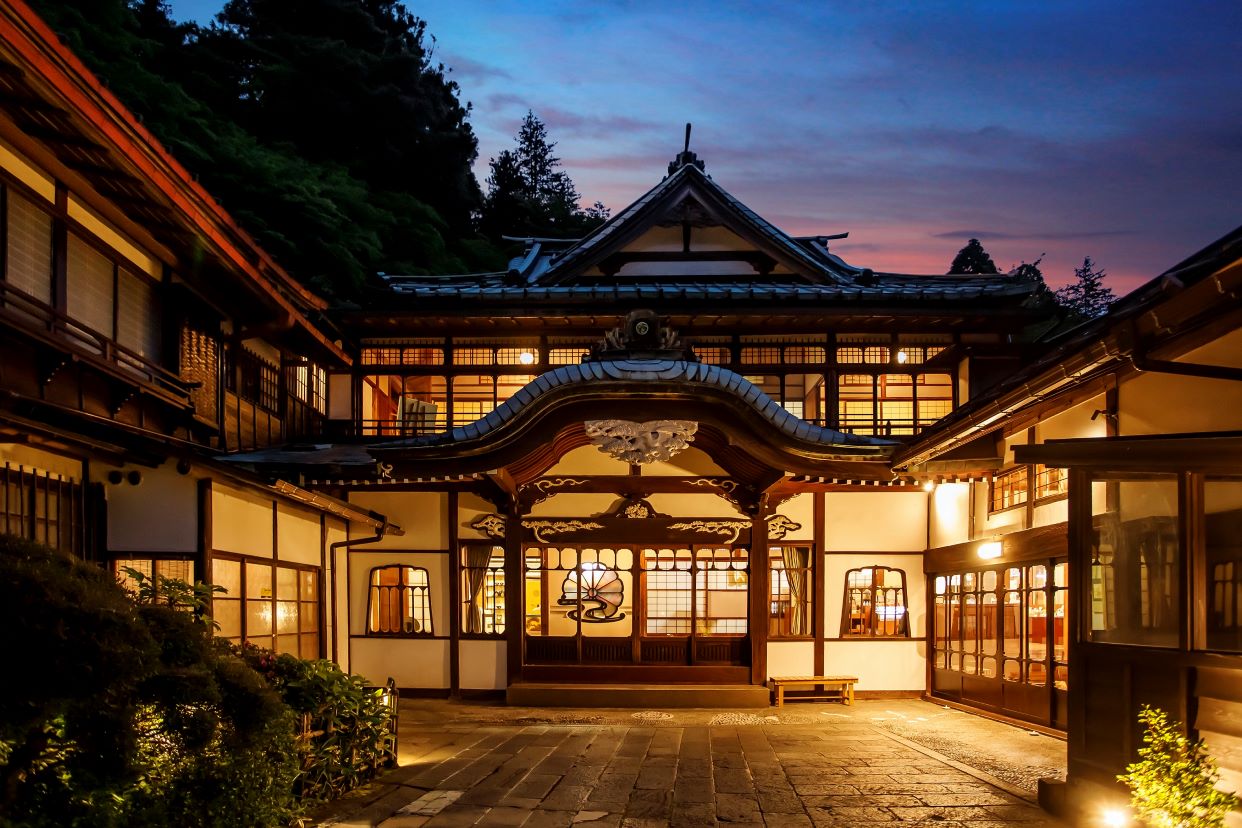
A guest arrives at four, hours before dinner, with nothing scheduled and nowhere to be. A yukata is laid out. The bath is drawn. By the time the first dish arrives, the day's only appointment has already been kept: to slow down. This is the ryokan's argument, and it is worth taking seriously.
The itinerary with nothing on it
Most travel is organised around movement — a shrine at nine, a market at noon, a viewpoint at dusk. The ryokan is organised around its absence. Check-in is early, often mid-afternoon, precisely so that nothing needs to happen next. The bath is drawn before dinner rather than after, so the evening opens with a pause rather than closing with one. Dinner arrives in a room the guest has already settled into, course by course, over hours rather than minutes.
None of this is incidental. A ryokan stay is built, deliberately, around long stretches of unstructured time — for the property, but also for the guest's day. That has to be designed for, in the same way a shrine visit or a train connection is designed for. A property with fewer rooms than a business hotel, staffed at a ratio a Western hotel would find uneconomical, exists to make idleness comfortable rather than awkward. Removing the itinerary is not a lesser version of hospitality. It is a different discipline, aimed at a different result.
The bath before dinner
The bathing sequence is the clearest expression of this. Guests are expected to bathe before the evening meal, not after — a small piece of sequencing with a large effect. Arriving warm, unhurried, and freshly changed into a yukata puts the body in a state a menu alone cannot produce. Dinner is then met at rest rather than raced toward.
Many ryokan draw on a natural hot spring, or onsen, and the etiquette around it — washing thoroughly before entering, no soap in the shared water, no swimwear, quiet rather than conversation — is not there to make bathing formal. It is there to make it communal without making it social: everyone in the water is left alone, together. That combination, of shared space and private silence, is difficult to manufacture and easy to recognise once you have felt it.
The water itself varies by region and mineral content, and Japan's volcanic geology means the source and character of a bath can differ meaningfully from one valley to the next. But the ritual around it — the order of bathing, the quiet, the timing before dinner — is consistent enough to function as a shared grammar, understood without being explained.
Kaiseki as a private performance
Dinner is the evening's centre, and in most ryokan it is kaiseki: a sequence of small, seasonal courses, often served in the room rather than a dining hall. The format matters as much as the food. A meal delivered course by course, over an evening, to a room with no one else in it, is not a faster or slower version of a restaurant dinner — it is a different kind of event, closer to a private performance than a service.
The menu changes with the season and, often, with what a nearby producer has that week — a particular fish, a wild vegetable available for only a few days. This is presented without explanation, on the assumption that the guest will ask if they want to know more, and will simply eat if they do not. Nothing on the tray is there to impress; it is there because it is the right thing to serve on that day, in that season, in that room. That restraint is itself a form of hospitality — the meal does not need the guest's attention to justify itself.
Breakfast, the following morning, repeats the logic at a smaller scale: grilled fish, rice, pickles, a soup — plain components, carefully sourced, served without ceremony because the ceremony happened the night before.
An evening with nothing to prove
What follows dinner is, by design, very little. A guest might walk the grounds, read, sleep early, or bathe again before bed. The futon is laid out while the room is at dinner, so returning to it feels like arriving somewhere already prepared rather than a task to perform. There is no turndown chocolate, no card suggesting tomorrow's excursions. The absence of a next step is the amenity.
This can feel, to a first-time guest, faintly disorienting — the instinct to fill an evening runs deep in most travel. But the ryokan is not withholding entertainment; it is offering rest as a complete experience rather than a gap between two better ones. A well-run stay makes that legible within the first hour: the pace of the greeting, the unhurried walk to the room, the absence of anyone rushing to explain the schedule, because there isn't one.
Rest as design, not an afterthought
It is worth being precise about what is being claimed here. This is not an argument that sightseeing is inferior to rest, or that a trip should be spent entirely in one room by a hot spring. It is an argument that rest, done properly, is not the empty hours between the temple and the market — it is its own kind of experience, with its own standards, and it rewards being taken as seriously as the sights around it.
That is a harder thing to build than an itinerary. A full day of sightseeing can be assembled from a list of famous places and a map. A good evening at a ryokan depends on sequencing — the timing of the bath, the pace of the courses, the moment the futon appears — that has been refined over a long time, and that a guest is meant to feel rather than notice. Get the order wrong and the same ingredients — a hot spring, a seasonal menu, a quiet room — produce something closer to a hotel with better food. Get it right, and an evening with nothing scheduled becomes the part of the trip a guest remembers most clearly.
Why it matters now
A journey built entirely around movement — one city to the next, one sight to the next — asks a great deal of a traveller and gives little back in the way of pause. Placed between two demanding days, or at the end of a longer trip, a ryokan evening functions as a counterweight: not a rest from Japan, but a different way of experiencing it, unhurried and undirected. The country that perfected the choreography of a temple garden and the timing of a tea ceremony has, in the ryokan, applied the same attention to an evening with nothing on the agenda at all. That it can be designed this deliberately, and still feel like doing nothing, is the point.
Sources: Japan National Tourism Organization: https://www.jnto.go.jp/. Nippon.com, on ryokan and onsen culture: https://www.nippon.com/en/.