
On Kyoto
The Quiet Hour
In Kyoto, the crowd is not a place. It is a time of day.
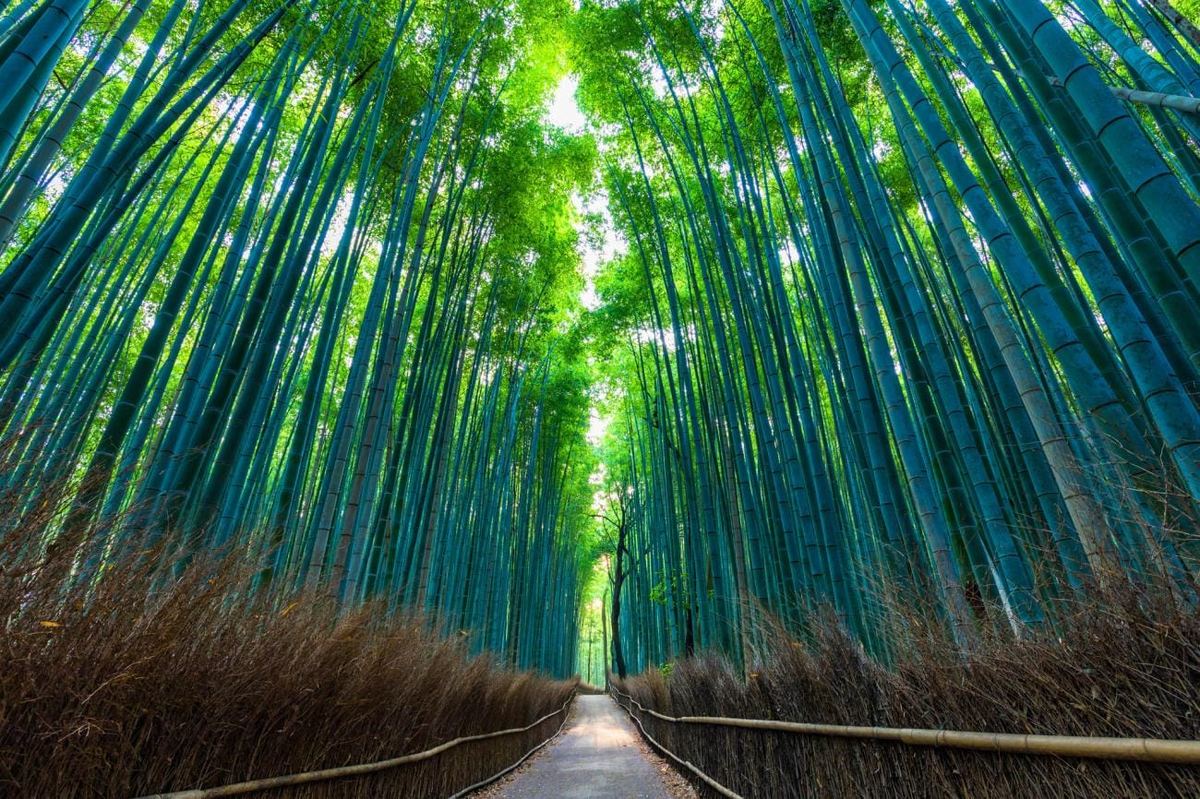
Kyoto's most photographed places are not crowded by nature; they are crowded on a schedule. A path that holds a thousand people at eleven can stand nearly empty an hour after opening — same stone, same light, same silence the temple was built for. The difference between spectacle and stillness is rarely a matter of distance. It is a matter of time.
A tale of two mornings
Take the wooden stage at Kiyomizu-dera, cantilevered over a hillside of maple and pine, on two mornings a week apart. Arrive with the first visitors and the valley is still in shadow, the boards cool underfoot, a handful of pilgrims clapping twice before the shrine and no one else in sight. Arrive three hours later and the same stage is shoulder to shoulder, a queue forms for the view, and a dozen languages compete over the sound of shutters. Nothing about the temple has changed. The wood is the same wood. What has changed is the clock.
The pattern repeats across the city. Fushimi Inari's vermilion gates, tunnelling up the mountain in their thousands, are photographed by nearly everyone who visits Kyoto — and nearly everyone photographs the same lower gates, at the same mid-morning hour, with the same strangers in the frame. Climb past the first two torii before eight and the tunnel empties out within a few hundred metres; the gates keep going for an hour's walk, past a shrine to a fox spirit few tour groups reach, and for most of that climb you will meet almost no one at all.
Even a site with only one thing to see keeps the same rule. Kinkaku-ji's gold-leafed pavilion is reflected most cleanly in its pond in still, early light, before the wind picks up with the day's foot traffic and the water's surface breaks into ripples from every side. By late morning the same reflection is broken by nothing more dramatic than a few hundred people breathing and shuffling along the same gravel path. The building has not moved. The water has simply had its morning stillness taken from it, one visitor at a time.
Why the clock is the real crowd
This is not an accident of popularity. It is a matter of logistics. A coach tour breakfasts at the hotel, boards by nine, and reaches its first stop by ten — which means every coach in the city reaches its first stop within the same narrow window. Independent travellers, without a schedule to keep, drift towards the same hour out of habit: a slow start, breakfast, the day's first stop by mid-morning. The result is a city where demand concentrates not only in a handful of places — Kyoto's overtourism problem is well documented — but within a handful of hours inside each of those places. The crowd, in the end, is not really about how many people come. It is about how many arrive at once.
Built for an hour before you woke up
The temples were not designed with a mid-morning visitor in mind. Zen gardens such as Ryoan-ji's raked gravel sea were built for a monk's morning rounds, not an afternoon audience; the sweeping and raking happens before the gates open, and the pattern you see at nine has not yet been disturbed by anyone's footprint. Shinto shrines mark the day by the movement of light rather than a ticket window: at Fushimi Inari, the vermilion gates were built to be walked at any hour, because the mountain does not close. The quiet hour is not a trick for avoiding tourists. It is closer to the hour the place was actually built for — before the modern shape of tourism rearranged the day around a different rhythm entirely.
An unlikely ally
There is a small irony in who is best positioned to keep this hour. Jet lag, for a traveller arriving from Europe or the Americas, tends to produce exactly the wrong sleep for a normal holiday and exactly the right one for Kyoto: wide awake at five, drowsy by nine in the evening. Rather than fight it, the quiet hour simply uses it. A traveller who gives in to an unfamiliar body clock for the first few days finds themselves walking into Kiyomizu-dera or Ryoan-ji at the one hour when the city still belongs mostly to the people who live and work in it — a rare case where the least pleasant part of long-haul travel turns out to be useful.
Dispersing demand in time, not only in space
Much of the conversation about easing Kyoto's crowds has focused on where visitors go: encouraging trips to Nara, Otsu, or the hills of Tanba so that pressure eases on Gion and the eastern temples. That matters. But it treats only half the problem. Kyoto has already moved to restrict tourist access to parts of Gion's private lanes and to separate tourist and resident bus routes — measures aimed at protecting daily life in a city where residents and visitors share the same narrow streets. Time is the other lever, and it is far less used. A garden seen at eight and a garden seen at noon are, for practical purposes, different destinations: different light, different sound, a different number of people between you and the view. Spreading visitors across the hours of a day disperses pressure just as effectively as spreading them across a map — and it asks nothing of the traveller except an earlier alarm. It is the same logic behind building a day around timing, not only geography: fewer places, seen at the hour they were actually meant to be seen.
Where the rule doesn't apply
The quiet hour is not a universal key. Kyoto's autumn illuminations, when temples such as Eikando light their maple gardens after dark, are deliberately built around an evening crowd, and arriving early misses the entire point of the event. Festivals follow their own calendar for reasons that have nothing to do with visitor numbers: Gion Matsuri's floats process in July because the festival marks a purification rite tied to that month, not because a planner chose a convenient hour. Treating every experience in Kyoto as something to be optimised against the crowd would miss the occasions built to be shared with one. The quiet hour matters most for the places whose meaning was found in stillness to begin with — a garden, a shrine at rest, a mountain path — not for the ones whose meaning depends on other people being there.
What the hour before the coaches actually buys
None of this requires a secret itinerary or an unusual place. It requires only arriving before the day's demand catches up with the day's supply of famous gates and gravel gardens. The reward is not simply an empty photograph. It is closer to what the place was for before it became a place to visit at all: a garden at the hour its keeper still moves through it, a mountain path with only the sound of your own steps, a stage over a valley with the mist not yet burned off. Kyoto rewards travellers who treat time the way they already treat distance — as something worth planning around. The city most people describe when they get home is very often the one they saw an hour before everyone else did.
Sources — World Economic Forum, on the concentration of Japan's inbound tourism and Kyoto's civic response: https://www.weforum.org/. Kyoto City, official information on measures to manage tourism pressure in historic districts: https://www.city.kyoto.lg.jp/.